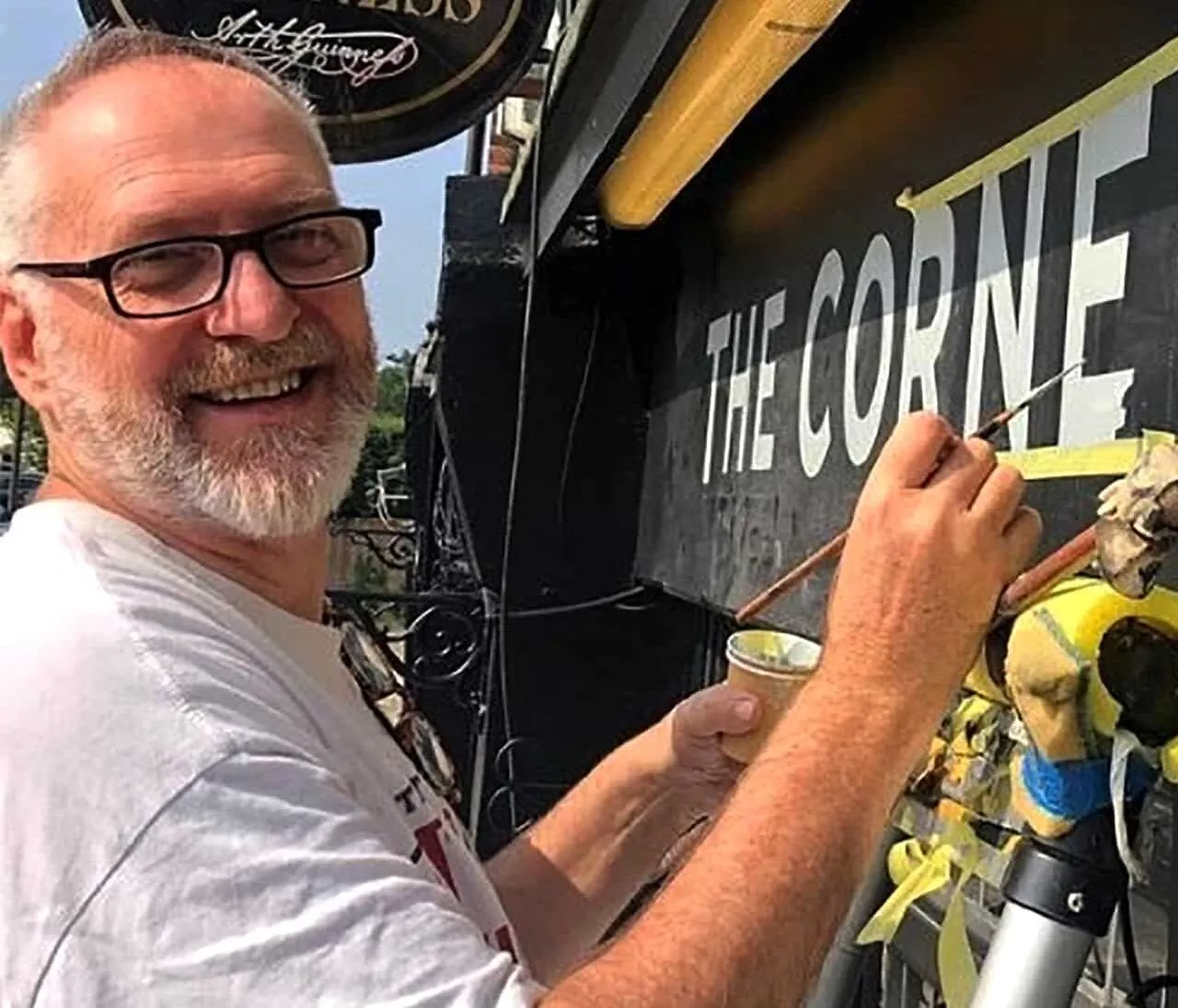
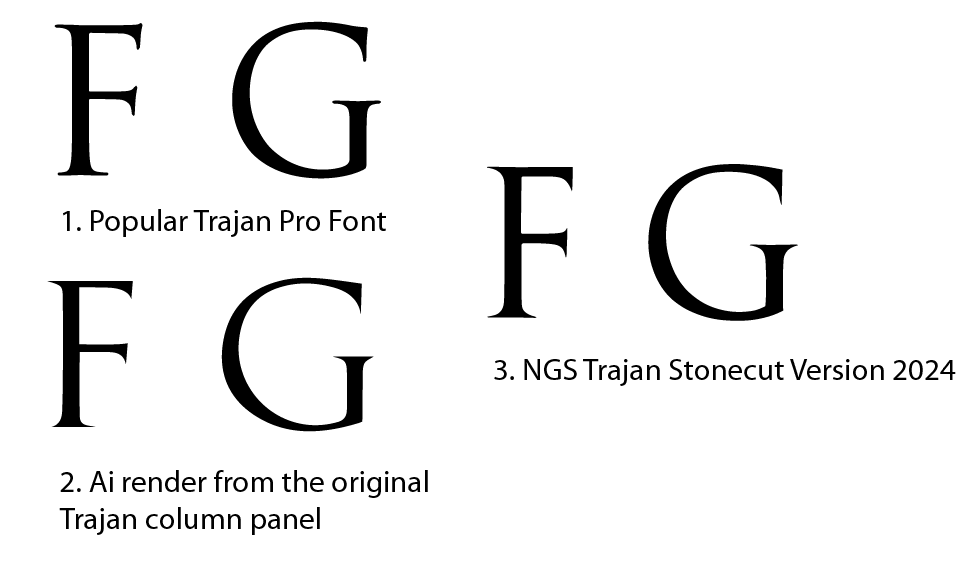
NGS Trajan Lettering Research and Historical Foundations Introduction The Nick Garrett Signwriters (NGS) possess extensive knowledge and craftsmanship in producing authentic Tru-Cut Trajan lettering, a style rooted deeply in classical Roman inscriptions. Their expertise is complemented by a comprehensive understanding of the historical development of the Trajan typeface, notably Trajan Pro, and the pioneering research conducted by Edward Catich. This analysis aims to compare NGS’s latest research findings with these foundational elements, highlighting advancements and nuanced insights. Historical Context of Trajan Lettering Trajan lettering originates from the monumental inscriptions on Trajan’s Column in Rome, dating back to AD 113. These inscriptions exemplify the Roman mastery of stone carving, characterized by precise incised glyphs with clean edges and harmonious proportions. Over centuries, scholars like Edward Catich have meticulously studied these inscriptions, emphasizing the importance of brush and chisel techniques that influenced Roman letterforms. Edward Catich’s Contributions Edward Catich’s groundbreaking research in the mid-20th century revolutionized understanding of Roman inscription techniques. His experiments demonstrated that Roman letters were often created with a brush or stylus at an acute angle, resulting in distinctive serifs and stroke qualities. Catich’s work underscored the importance of tool angle and stroke direction in replicating authentic Trajan lettering, influencing modern typographic interpretations. Trajan Pro Typeface Evolution Trajan Pro, developed by Adobe in 1989, is a digital font inspired by the classical Roman inscriptions. While it captures the general aesthetic—serif shapes, proportions, and stroke contrast—it simplifies some nuances for digital rendering. Critics note that Trajan Pro tends to idealize the letterforms, sometimes overlooking subtle variations present in original stone carvings. NGS Latest Research Insights Recent investigations by NGS have focused on refining the authenticity of Trajan lettering through meticulous analysis of original inscriptions and advanced carving techniques. Key findings include: Tool Angle Precision: Confirming that traditional Roman carvers used an acute angle (approximately 30°) for incising glyphs, which influences the sharpness and depth of serifs. Stroke Dynamics: Demonstrating that strokes often exhibit a slight variation in width due to natural hand movement, challenging the uniformity seen in digital fonts. Material Interaction: Exploring how marble’s grain and weathering affect letter clarity over time, providing insights into restoration practices. Modern Replication Techniques: Developing Tru-Cut methods that replicate ancient carving tools and angles with high fidelity, ensuring authentic appearance and durability.
Published by {NGS} on {NGS_publish_date} {NGS_updated_date:hidden}