GOING THE EXTRA YARD
Case History: Signwriting Yard-O-Led — Birmingham Jewellery Quarter Studios
Yard-O-Led: Custom Front-of-House Architectural Traditional Signwriting
Location: 16 Regent Place, Jewellery Quarter, Birmingham B1 3NL
Client: Yard-O-Led (Est. 1822)
Discipline: Hand-Painted Masonry Lettering, Heritage Typographic Restoration & Street Addressing
Project Overview
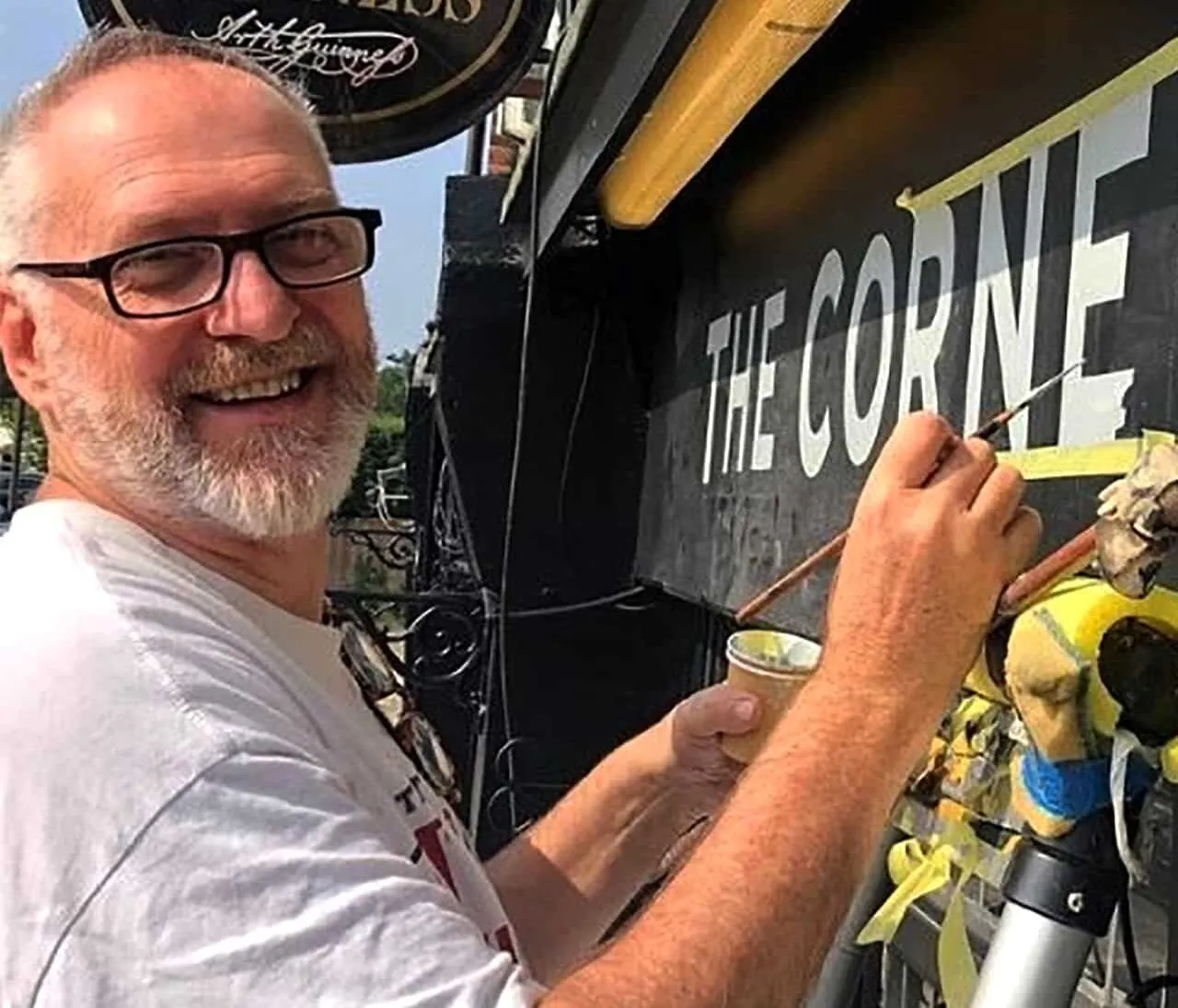
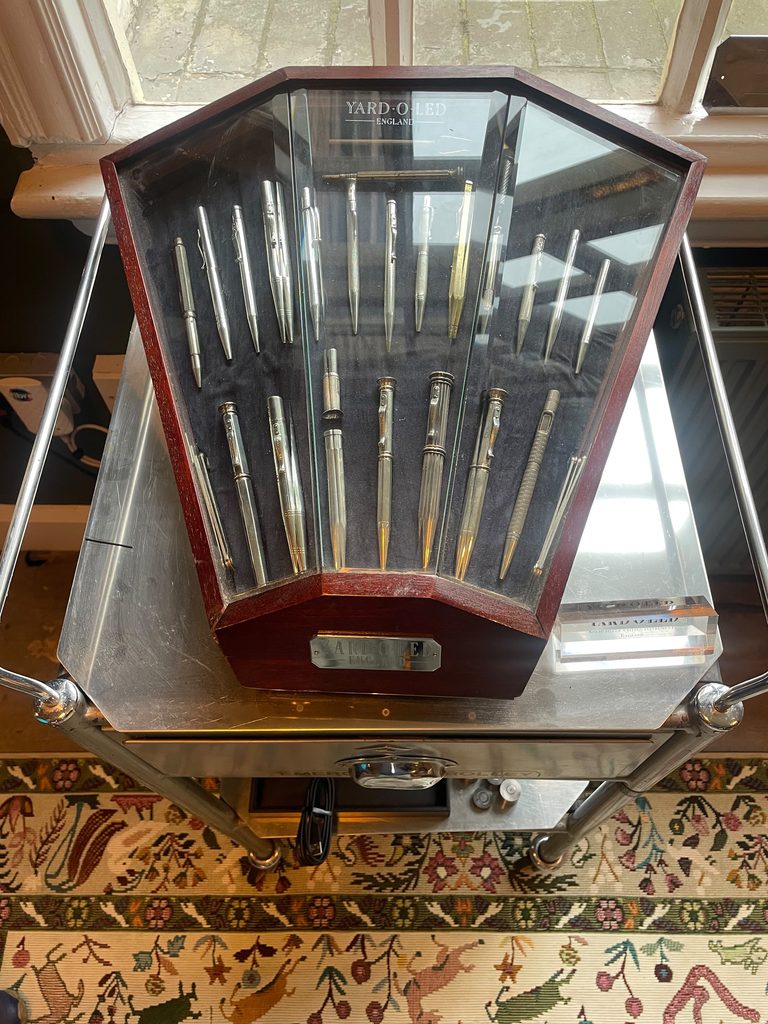
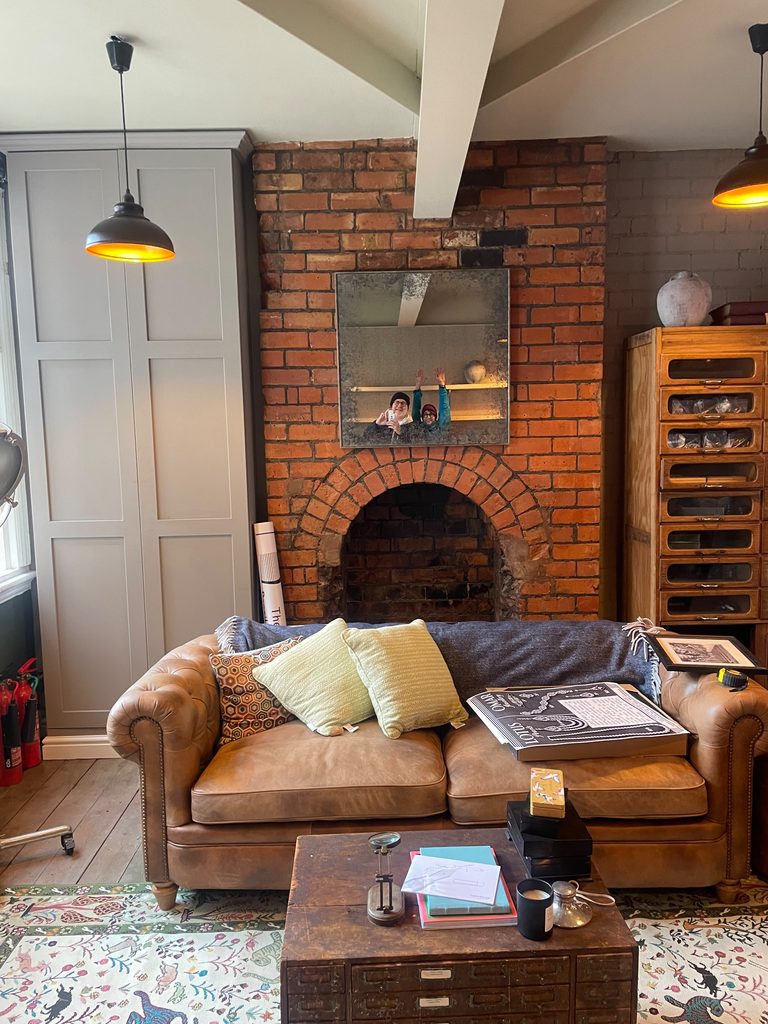
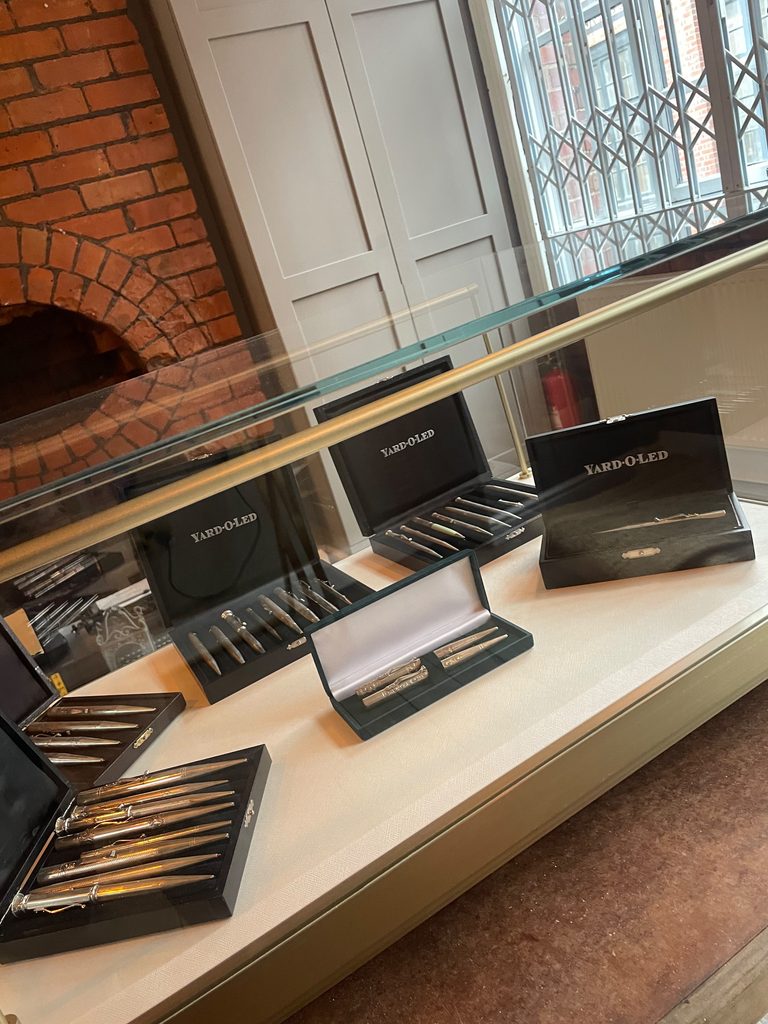
Founded in 1822 by Sampson Mordan, inventor of the world’s first patented propelling pencil, Yard-O-Led is one of Britain’s most storied luxury silversmiths and fine writing instrument makers. When the historic manufacturer established its dedicated studios at 16 Regent Place in the heart of Birmingham’s Jewellery Quarter, Seraina Signs & NGS (Nick Garrett Signwriters NGS sign writing Yard-O-Led studios,) was commissioned to execute the bespoke front-of-house architectural signage.
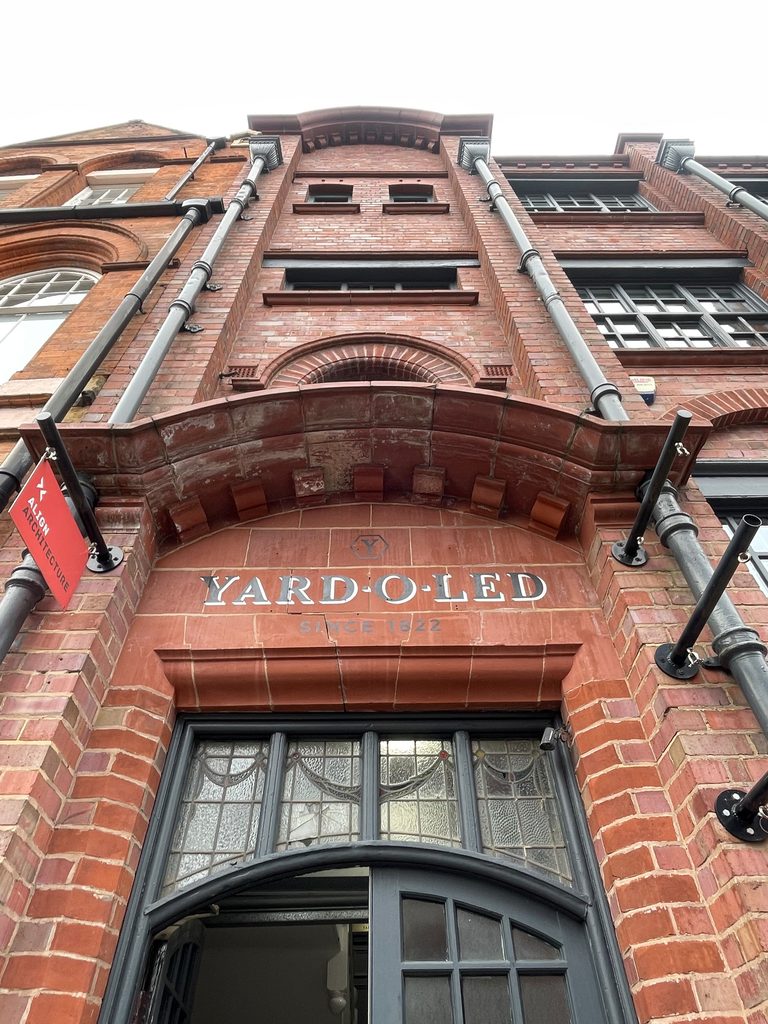
Housed within a classic Victorian red-brick and terracotta industrial building—complete with leaded arched fanlights, cast-iron rainwater hoppers, and Crittall-style steel windows—the façade required traditional hand-painted signwriting that honoured over two centuries of British craftsmanship.
Architectural & Typographic Execution
1. The Terracotta Entrance Tympanum (YARD·O·LED — SINCE 1822)
Positioned directly above the main arched doorway on the dressed terracotta lintel, the primary fascia serves as the studio’s focal point:
- Hallmark Crest: Centered at the apex of the arch sits Yard-O-Led’s signature hexagonal maker’s hallmark (
Y), hand-painted in crisp, fine-line black enamel directly onto the warm terracotta masonry.
- Custom Serif Lettering: Beneath the hallmark, the YARD·O·LED wordmark is rendered in a classical high-contrast Roman serif face, separated by centered square interpuncts. Each letter is executed in bright white enamel with a fine dark drop-shadow edge, lifting the typography cleanly off the rich red-orange stone so it remains legible from across Regent Place.
- Heritage Sub-Header: Centered directly below the primary wordmark, SINCE 1822 is hand-lettered in a clean, wide-tracked sans-serif capital style in matching deep charcoal-black, anchoring the brand’s founding year into the stonework.
2. The Street Address Panel (16 REGENT PL)
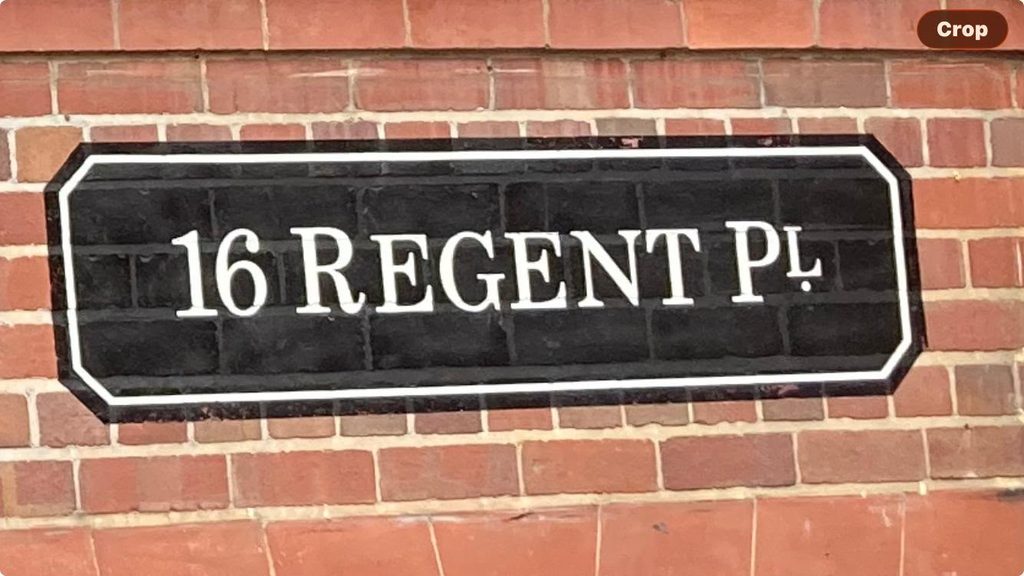
To the right of the main entrance, sitting over the lower workshop window lintel, NGS created a traditional framed street address plaque directly onto the brickwork:
- Chamfered Black Ground & Double Keyline: Painted onto a dark matte black panel framed by a crisp white inner border with clipped, chamfered corners that echo nineteenth-century British railway and municipal signage.
- Period Numerals & Ligature Detail: The address 16 REGENT PL is hand-lettered in classic transitional serif capitals, featuring a distinctive stacked
PLligature with an under-dot—a traditional typographic flourish that ties the studio’s exterior directly to Birmingham’s Victorian industrial heritage.
Signsmiths Meet the Silversmith Heritage
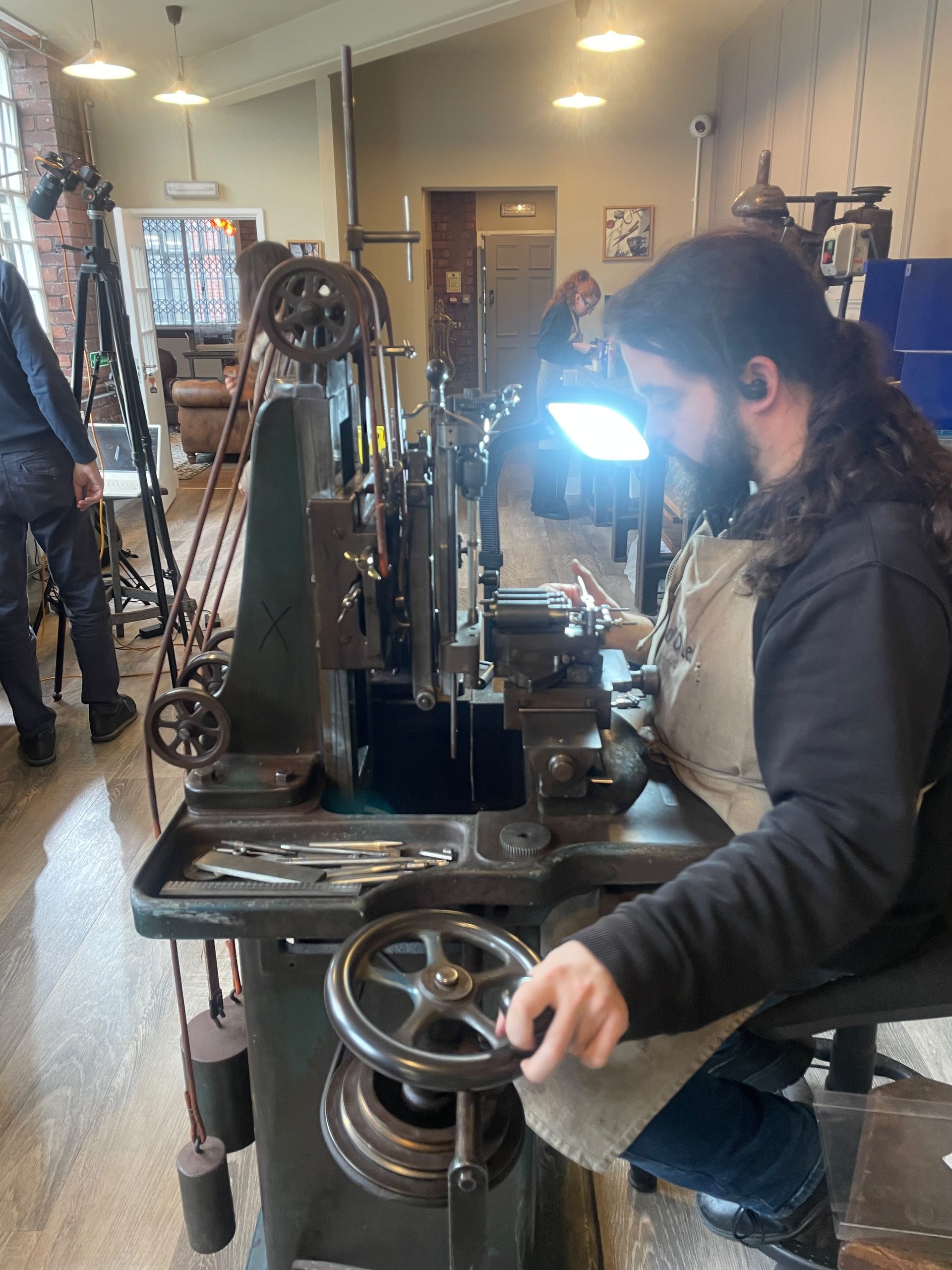
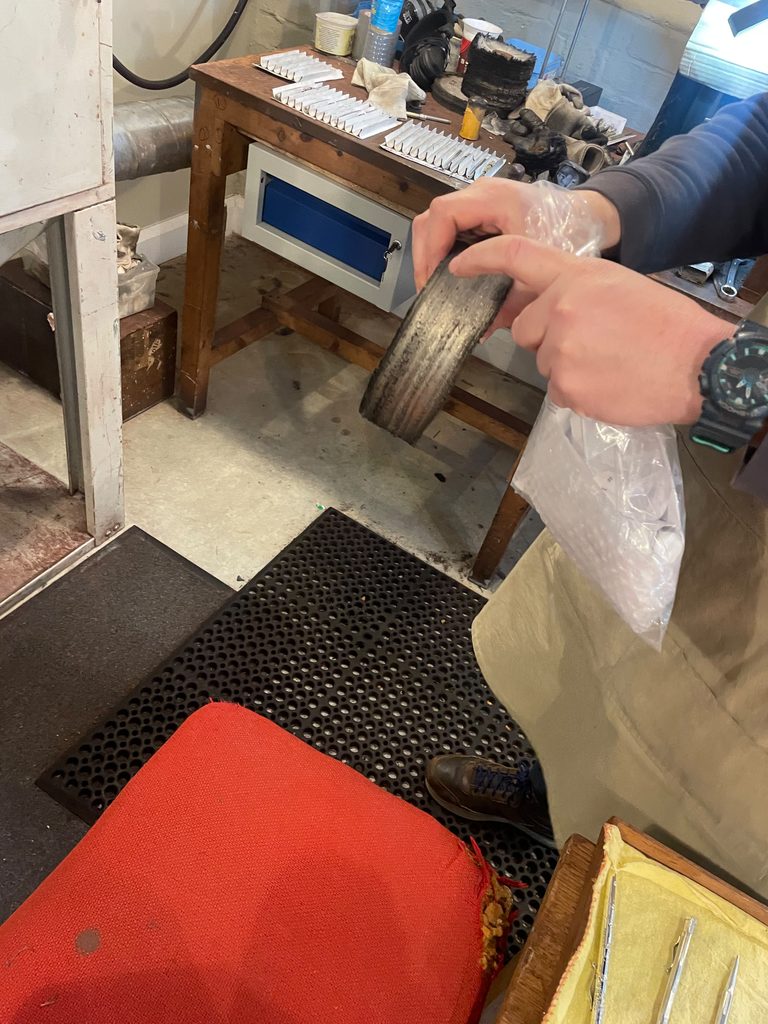
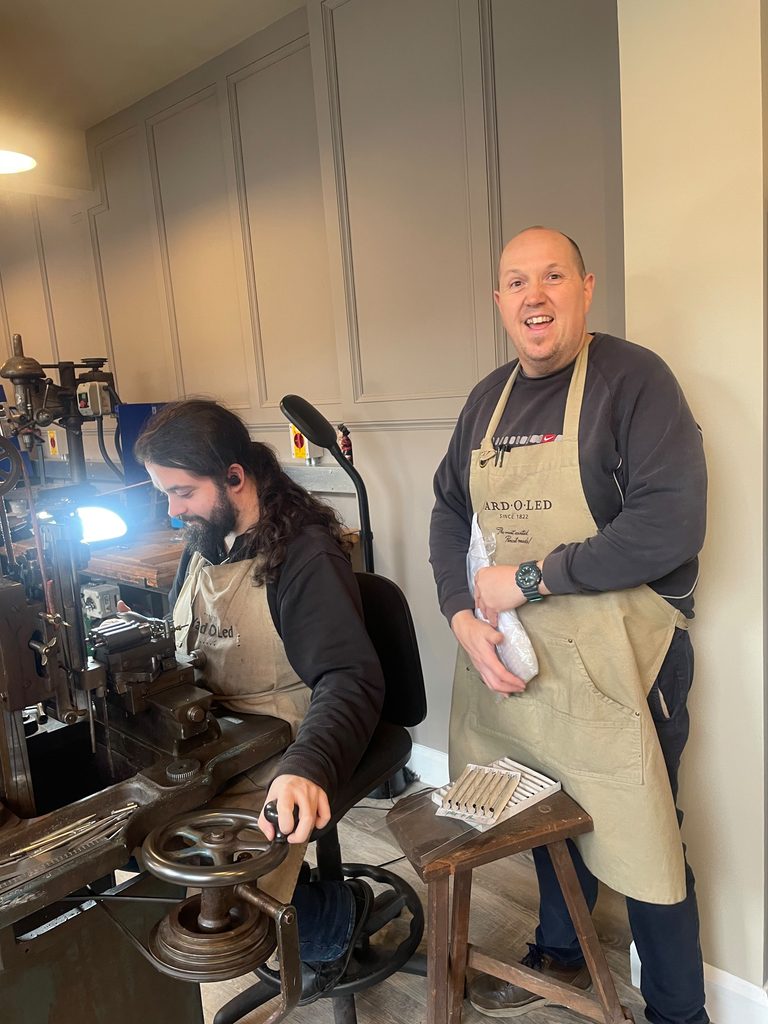
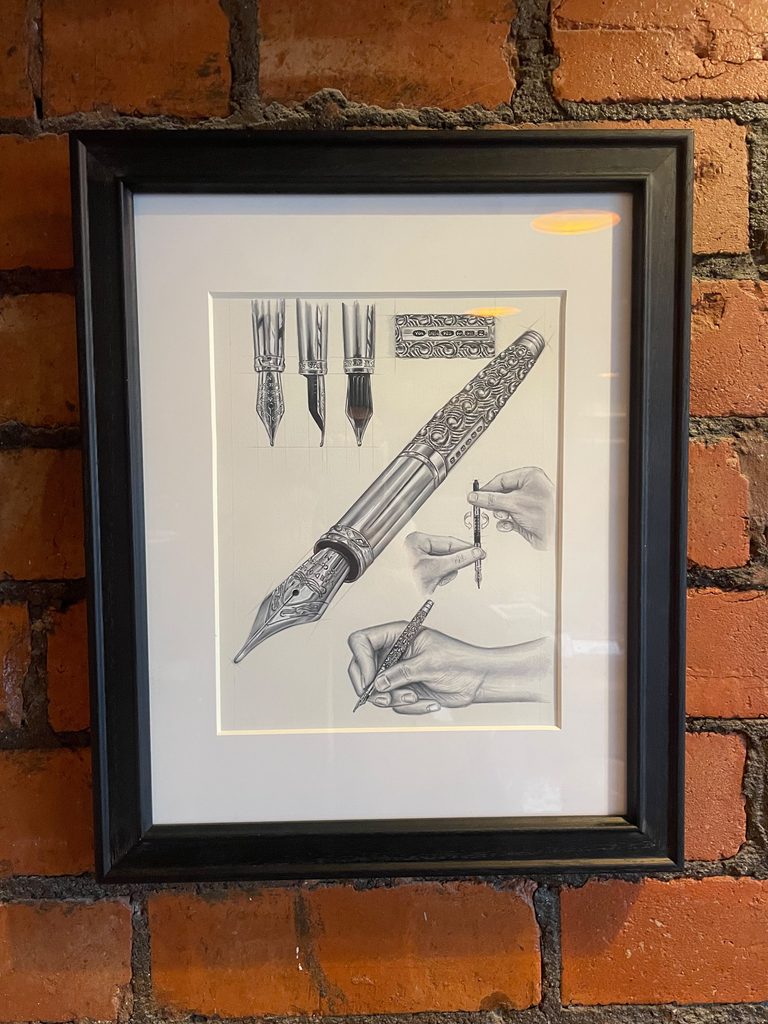
Inside 16 Regent Place, Yard-O-Led artisans hand-chase and engine-turn 925 sterling silver pens using nineteenth-century machinery. By eschewing modern acrylic plaques or vinyl graphics in favour of traditional mahlstick-and-brush masonry signwriting, the exterior signage mirrors the permanence, human touch, and precision engineering found inside the workshop.
Related NGS Heritage & Cultural Commissions
- Damien Hirst / Science Ltd: Hand-painted a massive 100-square-meter graph grid mural across four exhibition walls for the Damien Hirst Retrospective at the Tate Modern (2012).
- Tate Modern: Executed curatorial lettering, wayfinding, and artistic signage projects.
- Royal Estates: Provided high-end architectural lettering and historical property support.
- David Walter Timepieces: Crafted precision typographic and custom signwriting.
- Oliver Wilkins – The Tintype Man: Produced bespoke traditional signage for the wet-plate portrait studio.
- Wartski: Commissioned to paint custom classic Roman lettering for the historic London art and antique dealers (famous for Fabergé).